Source(s): Jim Howell, Ph.D., Entomologist, The University of Georgia
Bats are very beneficial creatures that feed on a wide variety of insects, including mosquitoes. Nonetheless, we as homeowners do not want them to establish residence in our attics or the walls of our homes.
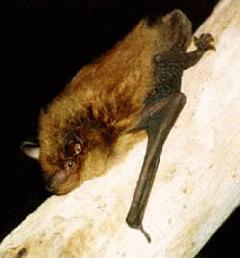
Identification
Sixteen bat species call Georgia home and all of them are insectivores. The big brown bat is the most common house-infesting species in the Atlanta area and is one of the few that will remain throughout the year. Other species migrate south in the fall.
The big brown bat has broad black ears and thick black wings and is chocolate brown on its back and sides, lighter on its belly, and reaches a length of about 4 to 5 inches. Another species, the Brazilian free-tailed bat, is common in the southern part of the state and forms huge colonies in deserted buildings, sometimes numbering in the thousands.
Biology
Big brown bats mate in the fall, and their young are born the following May or June. During that time, about 40 to 100 pregnant females roost together in nursery colonies. The young are capable of flying in three to four weeks. This species is largely crepuscular, feeding on mosquitoes and other insects. After an initial evening foray, the bats return to their roost. They feed again later in the night before moving back to the roost, where they will remain during the day. Predators of the big brown bat include rat snakes, the barn owl and the great horned owl.
Problems
Bats often roost in attics or other hollow spaces in homes. Bat droppings can build up over time, creating unpleasant odors. They also harbor bat bugs, which can be a problem for humans, especially after the bats have been removed.
Control
The favored method of bat control is exclusion. To be certain all bats are outside the structure, this should be done in the fall, when there are no young. It should also be done after dark, when the bats are out foraging for food. Bat valves are also available that will allow bats to leave, but not to enter.
Building bat boxes is a good way to keep bats out of your house but to keep them in the area.
Center Publication Number:227

- Icky Silverfish are Generally Harmless - September 24, 2013
- Menacing Mice - September 24, 2013
- Opossum Damage and Control - September 24, 2013
Hello:
I found your 2013 article (on ugaurbanag.com) about bats interesting.My daughter and her husband are building a house on an inlet of the Savannah River in Augusta GA. They love to kayak and view the wildlife but are concerned about mosquitoes. I built 4 bat houses and hanged them on my house in Atlanta several years ago and one was successfully colonized with bats a few years ago. But all are empty now. (I believe the trees nearby have gotten too large and shade them but other reasons are possible.) My daughter is quite busy with all the other decisions concerning the house and has placed me in charge of bats (which keeps me out of trouble on all other topics). 🙂
Could you be so kind as to point me in the direction of learning how/where to build and hang bat houses that might have a better success rate than I have achieved so far?
Sincerely,
Mike Heninger
Director of Bat Houses