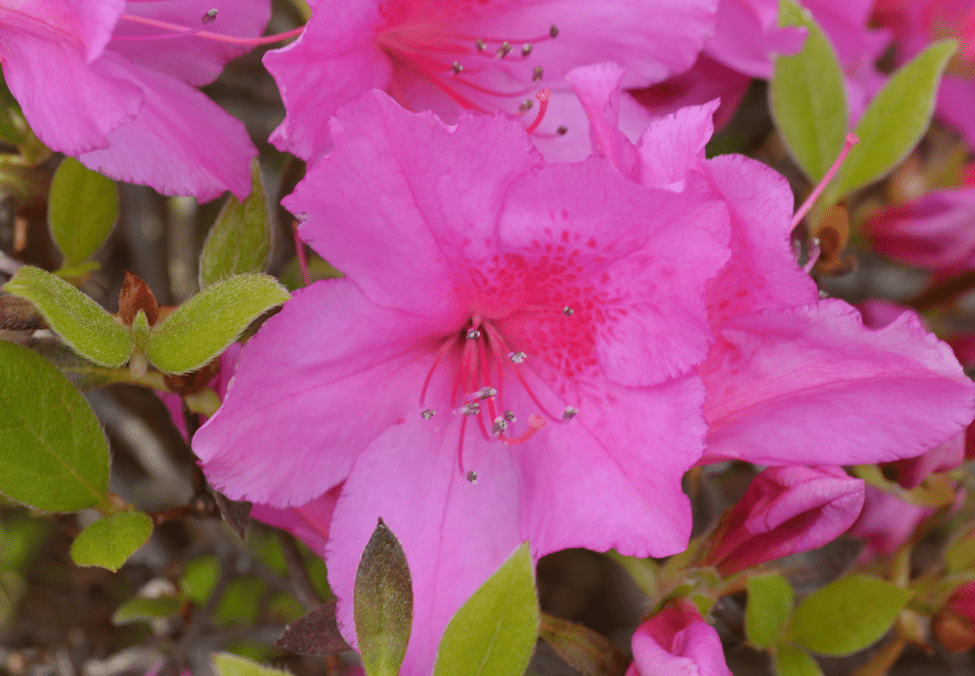
Dr. Bodie Pennisi, University of Georgia Horticulture Extension Specialist, reports that the azaleas will likely still bloom, only with a few less flowers. “Many of the flower buds remained dormant during the warm spell. Keep in mind however, that the flower buds on azaleas developed last summer and any pruning done prior to the spring will potentially remove those flower buds.” The same applies to Hydrangea macrophylla (Bigleaf Hydrangea) and H. quercifolia (Oakleaf Hydrangea). Microclimates also affect cold damage, for example, overhangs, tree canopies, evergreen shrubs, and built features in the landscape often provide frost protection, buffer against radiant heat loss, and provide wind breaks. Flower buds can be inspected for cold damage by opening a bud and looking for brown or black water-soaked tissues, indicating ruptured cells.
So far, January has delivered steady cool temperatures and allowed most plants to adjust to the cold with minimal damage. Typically, it is the rapid fluctuations from warm to cold that cause issues, so we shall see what unfolds over the next few weeks.
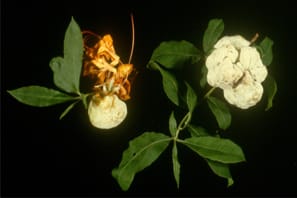
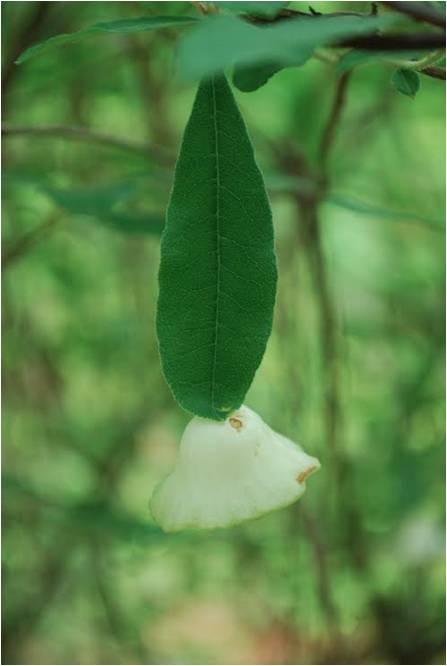
Azalea leaf gall Image by Jean Williams-Woodward, UGA Plant Pathology
Leaf galls
Azalea leaf gall, caused by the fungus Exobasidium vaccinii, are common on azalea in the spring during wet, humid, cooler weather.
The fungus invades expanding leaf and flower buds causing these tissues to swell and become fleshy, bladder-like galls. Initially, the galls are pale green to pinkish. Eventually, they become covered with a whitish mold-like growth. Fungal spores are produced within the white growth and are spread by water-splashing or wind to other expanding leaf or flower buds, or they adhere to newly formed buds, over-winter, and infect these buds the following spring. Older leaves and flowers are immune to infection. As the galls age, they turn brown and hard.
The disease does not cause significant damage to affected plants. It just looks unsightly.
Azalea leaf gall can be prevented in subsequent years by removing the galls by hand as soon as they are detected and destroying them before they turn white and release spores. Fungicides are generally not needed or recommended for control of this disease.
A common rose problem this year is injury caused by rose sawflies, also known as rose slugs.
These insects do not discriminate on the types of roses on which they feed. Even ‘Knock Out’ roses make a tasty meal for these critters. Home gardeners often ask why ‘Knock Out’ roses are affected if they are supposed to be problem-free. These roses are bred for resistance to certain diseases, like black spot, but are still damaged by a variety of rose-loving insects.
Sawfly larvae
Sawfly larvae look similar to the caterpillar stages of moths and butterflies, but have six or more pairs of prolegs behind the three pairs of true legs on their body. True caterpillars have fewer prolegs.
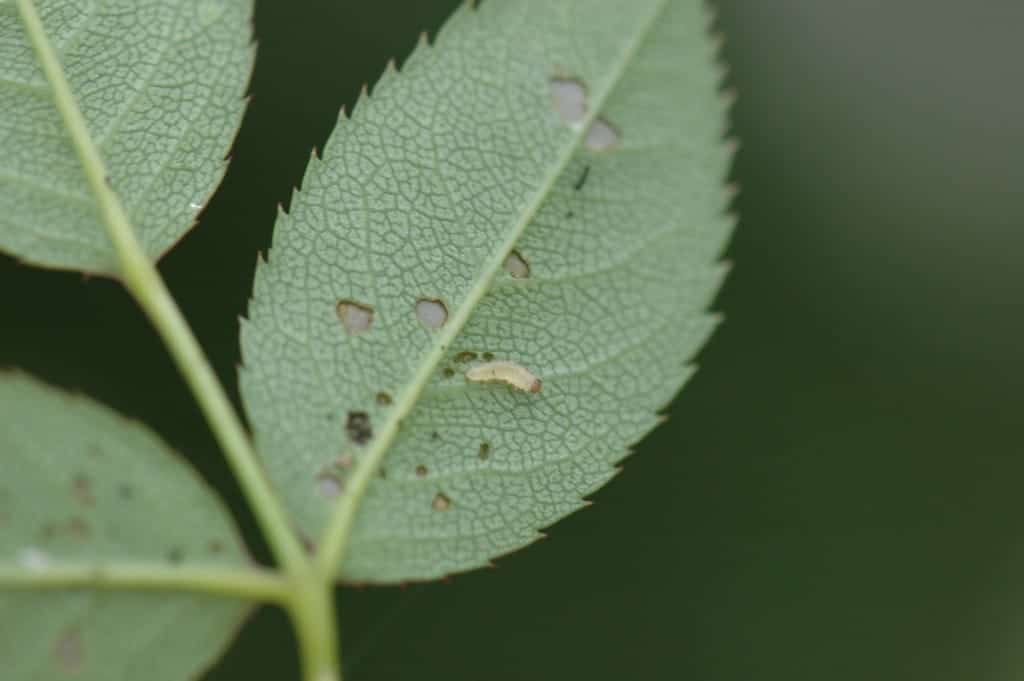
Caterpillars can also affect roses in the spring, but the damage they cause is slightly different. Caterpillars chew large holes in the leaves. Sawfly larvae chew a thin layer off the surface of leaves, leaving a skeletonized appearance.
If you hold up an affected leaf, you can see light shining through it. This unique “window pane” damage is a classic sign of sawflies. If you look carefully, you might even find a few, tiny, slug-like larvae on the leaves.
Sawfly damage
Some sawfly species can chew holes through the leaves as they get older, but usually you will see both types of damage on the same plant. Sawfly larvae eventually become small, non-stinging wasps that feed on other insects.
Begin scouting for sawflies in April or early May. Most sawfly species feed through June and will not return again until next spring. The larvae are often found on the undersides of the leaves, so inspect both sides of the leaves carefully. Keep in mind that the damage caused by sawflies is only to the leaves and mainly affects the appearance of the plant. Plants that are otherwise healthy can tolerate significant feeding damage and will usually put out new leaves by mid-summer.
Sawfly control
Sawflies are best controlled when they’re young. You can simply pick them off by hand. A forceful spray of water from a hose can also knock off sawflies. Once dislodged, they cannot climb back onto the plant.
Synthetic insecticides that control sawflies include acephate (Orthene), carbaryl (Sevin), malathion and various pyrethroids. Avoid using insecticidal dusts and spraying flowers, as many insecticides are highly toxic to bees and other pollinators.
Imidacloprid (Bayer Advanced), a systemic insecticide, can be applied to the soil around the roses in spring before feeding activity is noticed. However, once the damage is noticed, it is usually too late for a systemic product to be effective.
Bacillus thuringiensis (Bt) products are effective against leaf-feeding caterpillars, but not on sawflies.
Be on the lookout for fungus affecting native azaleas in Georgia
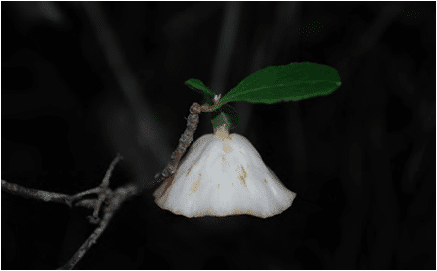
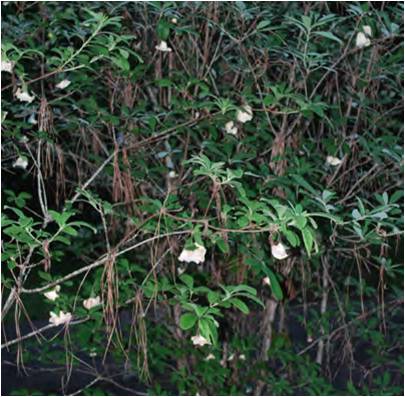
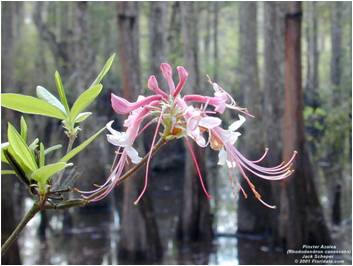
Dr. Marin Brewer at the University of Georgia is working on a fungus that affects Rhododendron canescens, which is commonly known as Piedmont Azalea, Pinxter Azalea, Wild Azalea, Sweet Mountain Azalea, or Wild Honeysuckle. The fungus, known as Exobasidium, forms a flower-shaped gall from the leaves of the azalea. The galls emerge in April and last into the summer.
Piedmont azalea (Rhododendron canescans)
If you see these flower-shaped galls on azalea in Georgia or have seen them in previous years please contact Dr. Marin Brewer at mtbrewer@uga.edu. We would like to collect them fresh and record their locations. They have been previously spotted in Florida and Alabama.
Jean Williams-Woodward, Extension Plant Pathologist
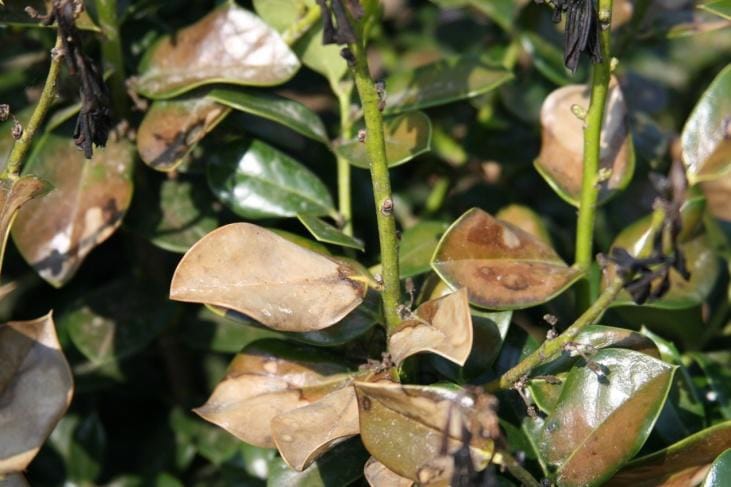
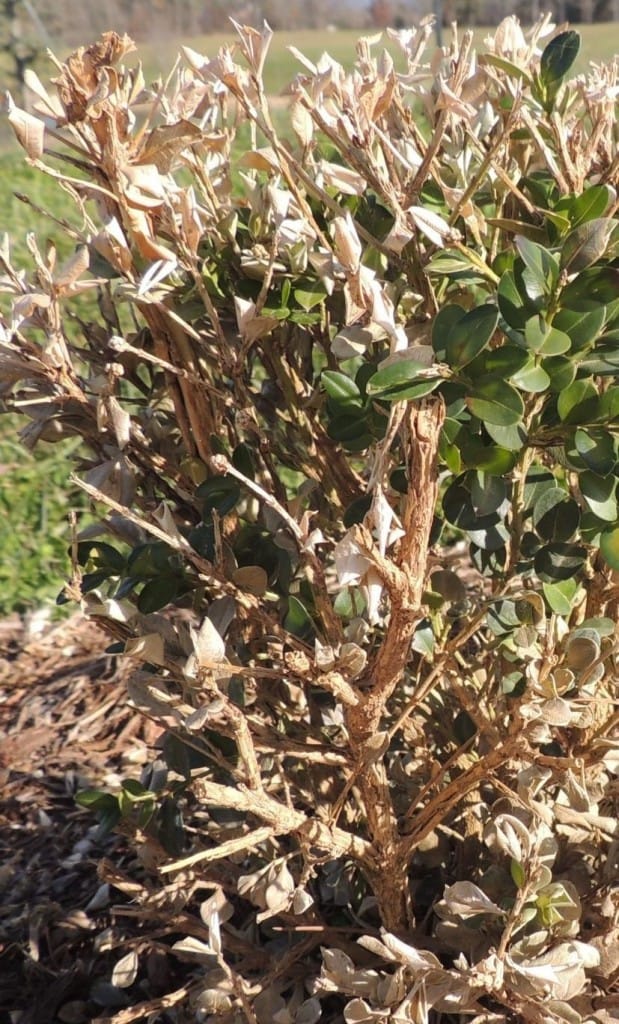
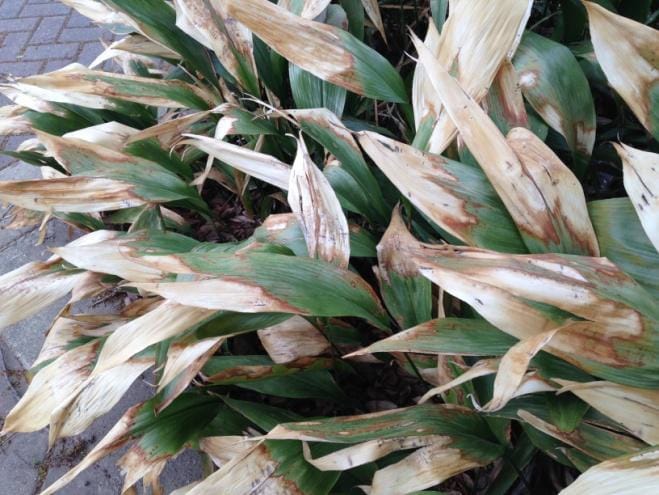
Freeze injury symptoms can include blackening or bleaching of foliage, tip dieback, stem or branch splitting, and plant death. The damage may not be readily apparent, especially on trees. Trunk damage and splitting may develop months to years later.
Often weak pathogens invade the damaged tissues resulting in trunk and branch cankers (usually from Botryosphaeria spp. infection) and secondary infection by weak pathogens, such as Colletotrichum spp. and Pestalotiopsis spp.
The best approach to deal with freeze injured tissues is to prune off the affected tissues. Prune dead branch tips after bud break. Give plants, such as liriope, a shearing to remove dead foliage.
Freeze injury symptoms of bleached, necrotic foliage and split bark (seen at arrows) on boxwood (left), cast-iron plant (upper right) and holly (bottom right). (Images of holly and cast-iron plant by Jean Williams-Woodward; Image of boxwood by Greg Bowman, Gordon County Extension Coordinator)
Source – Will Hudson and Kris Braman, UGA Extension Entomologists
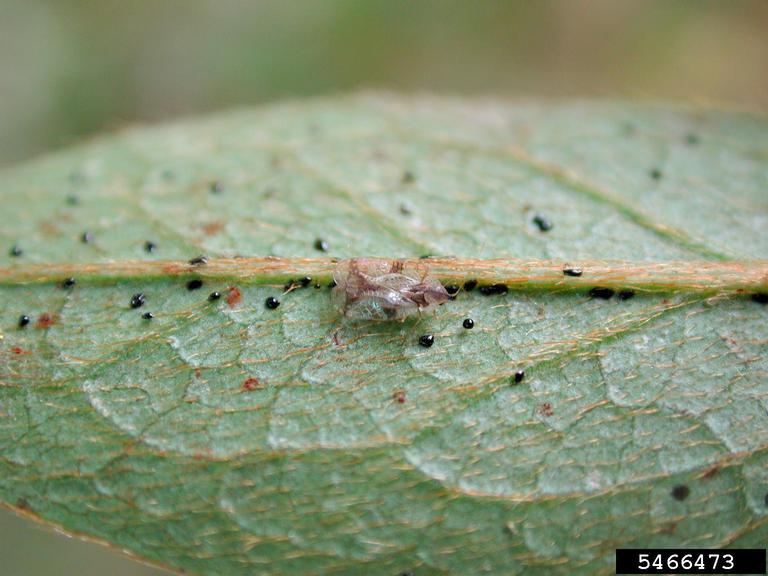
Azalea lace bug and injury, Pest and Diseases Image Library, Bugwood.org
Azalea lacebugs overwinter as eggs and hatch in the spring. Early spring is a good time to control them before they become too numerous.
Azalea lace bug attacks azaleas and some rhododendrons. Azalea lace bugs mainly feed on the undersides of the leaves, leaving the top of the leaf with white to yellow stippling or flecking. Heavy lace bug feeding on azalea can reduce plant vigor and flowering and affects the overall look of the plant.
Adult azalea lace bugs are 1/8 inch long. The transparent wings are held flat on the back. Their wings are lacy with two grayish-brown cross-bands connected in the middle. Nymphs begin life clear but quickly turn black and spiny. The flask-shaped eggs are partially embedded in leaf tissue, usually on the bottom of the leaf, and often are covered with a black tar-like secretion.
Look for the first signs of damage on plants in full sun or in protected areas beginning in March and continuing throughout the summer. Lace bugs overwinter as eggs. There are four generations a year. Lace bug adults and nymphs live and feed on the underside of leaves. Look for white stippling on older leaves. Look under leaves to find lace bug life stages and black fecal spots. On azaleas with a lot of damage, the top of the leaf can become grey or silvery.
Azaleas can withstand a lot of lace bug injury without much reduction in growth or bloom. The damage however on the leaves is unsightly. Control is generally recommended for the spring when insects are few in numbers. Treating early also protects the new leaves from damage from these insects. Once a leaf is damaged, the injury will be visible until the leaf falls off the plant.
Time spring insecticide applications for the presence of the first generation nymphs, usually with the early warm weather in late February in south Georgia through March and April in central and north Georgia.
Late summer insecticide applications are also helpful. Lacebugs overwinter as eggs and managing adults now reduces the number of eggs on plants and the number of lacebugs you will see next spring. Once lacebugs are in the egg stage, insecticides will not effectively manage them.
Cultural controls for azalea lace bugs
Plant azaleas only in partial shade. Too much sun stresses the plant and can make lace bug injury worse.
Keep plants healthy with proper planting, fertilizing and watering.
One of the best things you can do is scout azaleas (particularly early in the season) to identify and control infestations before numbers increase and leaf damage is severe.
Chemical Controls
Contact insecticides include the pyrethroids (bifenthrin, cyfluthrin, cypermethrin, permethrin, etc.) and carbaryl (Sevin and others) as well as other insecticides.
The biggest concern with contact insecticides is getting full coverage. The chemical must be applied to the underside of the leaves. This is difficult with larger, fuller plants.
You may need to make more than one application for full control. Check plants three to four weeks after the first application to see if they need another treatment. Knocking the branches over a white piece of paper should dislodge the lace bugs and make them easier to see.
Systemic insecticides
Some systemic insecticides may be used as soil applications (liquid drenches and granular treatments) as well as sprays. Soil applied insecticides enter through the root system and then travel into the leaves.
Foliar sprays of systemic insecticides tend to work more quickly than soil application but soil applications give a longer residual control – up to several months.
Even though some soil applied systemic insecticides may take two weeks or longer to become active in the leaves of large plants, this is not a problem if plants are small or if application is made early enough in the season to provide protection for the first flush of new leaves.
Read and follow all label directions since systemic insecticides differ in the way they work in the plant.
For more information:
For pest management information see the Pest Management Handbook (Follow all label recommendations when using any pesticide)
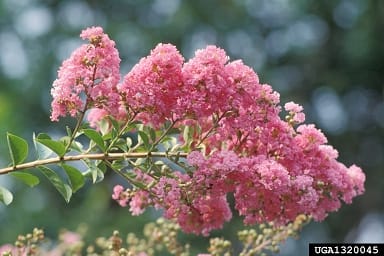
Because flowering ornamentals form their flower buds at different times of year, pruning times must be adjusted accordingly. Many spring-flowering plants such as azalea, dogwood, forsythia, redbud and rhododendron set flower buds in the fall, so pruning during the fall or winter months eliminates or decreases their spring flower display. Plants that typically flower during the summer form flower buds on new growth and can be pruned during the winter with no effect on their flowering. Examples of this type of plant are crape myrtle and abelia.
As a general rule, plants that flower before May should be pruned after they bloom, while those that flower after May are considered summer-flowering and can be pruned just prior to spring growth. One exception to this rule is the oakleaf hydrangea, a summer-flowering shrub that forms flower buds the previous season. Another exception is late-flowering azalea cultivars, which bloom during May, June or even July. Prune both the oakleaf hydrangea and the azalea cultivars after they bloom. Table 1 provides suggested pruning times for other plants.
Table 1.Suggested Pruning Time for Common Flowering Trees, Shrubs and Vines
Prune after Flowering
Azalea
Japanese Pieris
Beautybush
Lilac
Bigleaf hydrangea
Mockorange
Bradford Pear
Oakleaf hydrangea
Bridalwreath Spirea
Pearlbush
Clematis
Pyracantha
Climbing roses
Redbud
Crabapple
Saucer Magnolia
Deutzia
Star Magnolia
Dogwood
Shrub Honeysuckle
Doublefile Vibernum
Thunberg Spirea
Flowering Almond
Vanhoutte Spirea
Flowering Cherry
Weigelia
Flowering Quince
Winter Daphne
Forsythia
Wisteria
Japanese Kerria
Witchhazel
Prune before Spring Growth Begins
Beautyberry
Goldenrain Tree
Camellia
Japanese Barberry
Chaste Tree (Vitex)
Japanese Spirea
Cranberrybush Viburnum
Mimosa
Crape myrtle
Nandina
Floribunda roses
Rose-of-Sharon (Althea)
Frangrant Tea Olive
Sourwood
Grandiflora roses
Anthony Waterer Spirea
Glossy Abelia
Sweetshrub
Hedges
Ornamental plants that are not grown for their showy flowers can be pruned during the late winter, spring or summer months. Avoid pruning during the fall or early winter because it may encourage tender new growth that is not sufficiently hardened to resist the winter cold.
Some shade and flowering trees tend to bleed or excrete large amounts of sap from pruning wounds. Among these trees are maple, birch, dogwood, beech, elm, willow, flowering plum and flowering cherry. Sap excreted from the tree is not harmful, but it is unsightly. To minimize bleeding, prune these trees after the leaves have matured. Leaves use plant sap when they expand, and the tree excretes less sap from the wound.
Dr. Matthew Chappell, UGA Nursery Specialist, has started a Facebook page for nursery producers. Interested readers can “like” the page for timely information. This is the Facebook page description:
Here you will find updates on events, research, news and occasionally gossip related to commercial nursery production in GA and other states across the southeast.
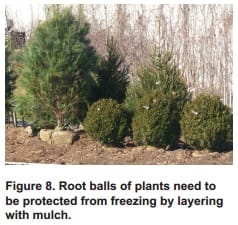
A new publication from UGA and other southeastern universities equips nursery workers (and others) to protect container and dug plants from freezing temperatures. The publication explains winter acclimatization and how cultural practices (pruning, watering, fertilization, etc.) can impact cold hardiness. The publication also discusses the types of winter injury and methods to protect plants from winter temperatures.
The following is a brief list of some of the Strategies and Techniques to Protect Plants
Push pots together in large blocks.
Wrap outside edge of plants with microfoam, spunbond nonwoven polyester material, or pine straw bales to protect from wind. No protection on inside containers.
Mulch in and around plants on the inside of the block using:
i. Newspaper
ii. Pine straw, hay, or some other grain
iii. Leaves or other composted material
Cover blocks of plants with microfoam or spunbond nonwoven polyester fabric.
i. Cover fabric with white polyethylene.
ii. Use mulches under the fabric.
Overwinter plants inside a quonset-style greenhouse or similar structure.
Place single-layer white poly cover on house.
i. Push plants close together with no further protection.
ii. Cover plants inside structure with microfoam or spunbond nonwoven polyester.
iii. Heal plants in with mulch.
Place double-layer white poly cover on house with inflator fan to create an insulating dead-air space between plastic covers.
i. Also cover plants with microfoam or spunbond nonwoven polyester.
ii. Provide an independent heat source inside the house:
Portable forced-air heater that runs on fuel or electricity
Permanent propane, electric, or wood-fired heater
Note: Organization of ideas based on Dunwell and McNeill, 2009.
Paul Pugliese, Agriculture & natural resources agent for the University of Georgia Cooperative Extension office in Bartow County
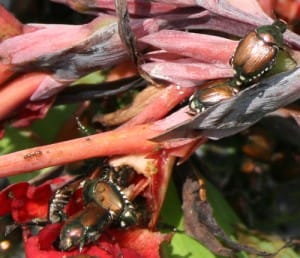
Japanese beetles dine on canna lily branches Image credit – Sharon Dowdy.
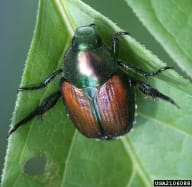
With their metallic copper and blue-green bodies and bronze wings, Japanese beetles might be considered beautiful if not for the damage they cause. The plentiful beetles munch holes into the leaves of landscape plants leaving what is often described as skeletal remains.
Prior to last year, Georgia had a few years of drought and unusually mild winters. The warm, dry soil conditions were not conducive for Japanese beetle grubs to survive over the fall and winter throughout most of Georgia. This gave Georgia gardeners and landscapes a nice reprieve from the pest and its damage.
Perfect conditions return
This past winter was ideal for Japanese beetle grubs and home and commercial gardeners are suffering through a resurgence of adult beetles this summer. The severity of local Japanese beetle populations varies depending on temperature and soil moisture. Most surveys indicate that Japanese beetles do not occur further south than the “fall line” between Macon and Augusta in Georgia. Yet, they can be found as far north as Canada.
If you’ve fought Japanese Beetles before, there’s a good chance they will return to your landscape – especially if your have some of their preferred plants. Japanese beetles feed on more than 300 species of broad-leaved plants but prefer about 50 species. Commonly attacked hosts include peach, cultivated and wild grapes, raspberry, plum, roses, apple, cherry, corn, hibiscus, hollyhock, dahlia, zinnia, elm, horse chestnut, linden, willow, crape myrtle, elder, evening primrose and sassafras.
They love leaves
The good news is the beetles only affect the leaves of trees and shrubs, so healthy plants can tolerate significant leaf loss without long-term consequences.
Adult Japanese beetles live four to six weeks, lay eggs (mostly in mid-August) and die. If the soil is sufficiently moist, the eggs will swell and produce larvae in about two weeks. The rest of the year, the beetles live underground in a larval stage feeding on the roots of grass and other plants before maturing into adult beetles in the summer.
Japanese beetle larvae are plump, C-shaped white grubs often seen in the spring when garden soil is first tilled. The grubs need soil moisture to survive the winter. Frequently irrigated lawns and landscapes tend to have higher grub populations.
Adult beetles emerge from the soil and begin seeking out plants for food in late May and early June. The first round of beetles are known as “scouts” because they find a good food source and release pheromone scents to attract more beetles. The masses then gather to feed and mate.
Control the first ones!
The key is to catch the early arrivers as soon as possible. Handpick or knock adult beetles off plants and drown them in soapy water. This is an effective control option for managing small infestations and preventing them from attracting more beetles.
Pheromone lure traps are not recommended for general Japanese beetle control in a small garden. They tend to attract more beetles to the area than would normally be present. Trapping should be done in areas away from gardens or landscapes to lure beetles away from desired plants.
Adult beetles can be controlled with over-the-counter insecticides. During heavy beetle outbreaks, sprays may be needed every seven to ten days to protect high-value, specimen plants like roses. A single application of a longer-lasting systemic insecticide, like imidacloprid, needs to be made 20 days before adult Japanese beetles are expected — usually around mid-May. Most systemic treatment options are not labeled for use on plants that produce edible fruits. Read and follow pesticide label’s application rates and safety precautions.
Controlling the grub stage generally has little effect on the overall damage caused by adult beetles, since adults can fly into your landscape from up to a mile away. Most homeowners rarely have grub populations large enough to cause damage to home lawns. Treatment may be necessary if more than five to ten grubs per square foot are present in lawns. Late summer and early fall insecticide applications are most effective at killing young grubs.